You're the one who holds everything together.
And you're exhausted.
Put It Down is a 12-week live group program for women who are tired of managing everyone else’s emotions, anticipating everyone’s needs, and abandoning themselves in the process
Starts Tuesday, September 29 · Applications close September 25
After you apply, you will get a link to schedule a 20 minute phone or video call with me

Does this sound like you?You walk into a room and know immediately that something is off.
Someone says "I'm fine" and your brain gets a new full-time job.
You say yes before you've checked with yourself, then resent it for a week.
You're the one everyone leans on. You couldn't say who you lean on.
You feel guilty resting. Guilty saying no. Guilty for being tired.
You replay conversations at 2am looking for the part where you were too much.
And if someone asked what you need right now - you genuinely wouldn't know (yet you know what they need)
Who this is forA short video from me, Alyssa Kushner, LCSW
so you have a better understanding!

Why knowing hasn’t fixed this
You've probably done the work.
Therapy, the books, the podcasts. A folder of screenshots about boundaries you've never quite used. You can explain your patterns more clearly than most people can explain their own.
And you still do it.
That isn't a failure of insight. It's that these patterns don't live where insight can reach them.
Somewhere early, your nervous system learned that you were safest when you carried more than your share.
That scanning the room kept things calm. That being easy, useful, and low-maintenance was how you stayed connected to people.
And then - because that's what nervous systems do - it automated all of it.
It doesn't check with you first. It doesn't wait for you to decide whether this particular person's mood is yours to manage. By the time you notice, you've already picked it up.
Which is why you can't think your way out of this. You have to practice your way out - repeatedly, in your real life, with support.
That's what these twelve weeks are.
The Four PatternsMost women see themselves in all four. That's the point - these aren't personalities, they're survival strategies, and they all come from the same belief: it's my job to carry more than my share.
The Emotional Manager
You read the room before you read yourself. Every shift in someone's mood, tone, or face registers as yours to handle.
The Peacekeeper
You manage everyone's comfort. You people-please, smooth it over, and go quiet about what you actually needed.
The Hyper-Responsible Rescuer
You step in, solve, carry, and take over before anyone even asks.
The Strong One
You carry it alone. Help is hard to accept, because underneath is the belief that if you don't do it, no one will.
Not sure which one runs the show for you?

What this actually is
Put It Down is twelve weeks of showing up on a Tuesday with other women who understand exactly what you're describing, because they're doing it too.
Every week we ground first - nervous system before anything else. Then we learn something real about why you do this. Then you write, and then we talk about it together as a group.
And every week you leave with one small experiment to try in your actual life. Support someone without solving it. Ask for help once. Let someone be disappointed and don't fix it.
That last part is where the change actually happens. Not in the teaching - in the week between.
This isn't therapy, and it isn't a course you watch alone at midnight. It's a small group, a real curriculum, and twelve weeks of practicing the thing you already understand perfectly well and still can't do.
The Twelve WeeksWe start with why you do this, move into what's actually yours, and spend the back half practicing - in your real relationships, with the group behind you.
*Subject to change based upon the groups needs
-
Getting to know each other, setting intentions and goals. More in depth on The Emotional Manager, the Hyper-Responsible Rescuer, the Peacekeeper, the Strong One - and the one belief underneath all four.
-
The fawn response, your nervous system, and some somatic regulation skills so we can work with the nervous system before trying to make shifts.
-
How self abandonment shows up in your relationships and what it costs you.
What self-trust is and how it gets broken and rebuilt.
Self-compassion as a practice, not a feeling.
-
The distinction between what is empathy and what is hyper-responsibility. What's yours, what isn't, what's shared. The Responsibility Audit, walked through together - including the resistance that comes up while you're doing it.
-
Over-giving, and absorbing other people's problems as your own. What support looks like when you're not carrying. Letting another adult have their own emotional experience. What’s healthy support vs rescuing.
-
Why boundaries activate your nervous system. Saying it once, without over-explaining. Learning to pause before you say yes and what questions to check in with yourself. on first before deciding how to proceed.
-
"I don't even know what I need." Telling needs from wants. Why your needs feel unsafe. Choosing from your values instead of from guilt.
-
Guilt as nervous system noise, not moral information. Distress tolerance skills. Sitting with someone else's discomfort without fixing it. Deliberately placed the week before you'll need it most.
-
Everything so far, aimed at the hardest room you'll be in this year. Planning specific boundaries for specific people. Scripts. What to do when the guilt hits at the table. Managing your nervous system in a house that taught it to scan. And how to recover afterward.
-
Emotionally immature parenting, parentification, family roles, core beliefs . Compassion without over-identification. It lands here on purpose: you'll have just been home.
-
Practicing new patterns. Receiving help without earning it back. Asking directly. Receiving help. Building relationships that are reciprocal rather than obligated.
-
Celebrating wins. Reflecting on what shifted. Who are you without carrying everyone? You'll write your personal maintenance plan - and your plan for Christmas and New Year - before you leave. Who you are without carrying everyone.
What Tuesdays Look Like:
We practice a brief mindfulness or grounding exercise. Nervous system first, before anything else.
Teaching. Twenty to thirty minutes on that week's topic, in plain language.
Journaling. So you can reflect on what was taught, explore some reflection questions and how it applies to you.
Discussion. This is where it stops being information and we share as a group.
Your challenge or intention for the week. One small, specific thing.
Done. And Slack carries it until next Tuesday.

The Holidays
Every year you white-knuckle the holidays.
You manage everyone's feelings at the table. You absorb the comment about your job, your body, your choices. You keep the peace, you clear the plates, and you drive home wondering why you feel like you've been hit by a truck.
And then you tell yourself next year will be different.
This cohort runs straight through it, on purpose.
The week of Thanksgiving, we plan your boundaries together - for your actual family, with actual words, before you walk in the door. The week after, you bring back what happened. And in December, you leave with a written plan for the rest of it.
Not "here's what you should have done." What you actually did, while it was happening, with women who get it.
What Changes When You Put It Down
You feel the yes forming, and you wait. Not every time. But sometimes, and sometimes is where all of this starts.
Someone in the room is upset and your body still registers it - and you let it stay theirs.
You say the shorter, truer thing instead of the longer, softer one you'd normally edit into.
The guilt still shows up ninety seconds after the boundary. It just stops being the thing that decides.
You get to the end of a day and you can actually answer the question of what you needed.
You can finally exhale because you’re not carrying as much and feel a physical release of tension.
And you walk into a room in December that you used to dread, and you're still tired afterward - but you're not burnt out.

Everything You Get
✓ Twelve weeks (75 min live sessions) of practicing this with the same small group - not starting over with strangers every week
✓ A nervous system grounding practice to open every session
✓ Weekly teaching on the real mechanics - the four patterns, the fawn response, your window of tolerance, hyper-responsibility vs. empathy, rescuing vs. supporting, boundaries, needs, guilt, self-trust
✓ A private Slack community for the full twelve weeks - for the wins, the questions, and the night before the hard conversation
✓ A journal prompt every Monday, tied to that week's teaching
✓ A weekly challenge - one small, specific thing to practice before we meet again
✓ A weekly accountability thread: "What are you putting down this week?"
✓ A dedicated Thanksgiving session on holidays, family, and boundaries - planned in advance, for your actual people
✓ A written maintenance plan, and a plan for the rest of the holidays, before you leave
✓ The full digital library - the Over-Responsibility workbook, the Integration Guide, the Responsibility Audit, zoom sessions recorded
✓ An invitation into the alumni community when you finish
Who this is forThis is for you if…
You feel responsible for other people's emotions
You struggle to name what you need, or even notice it
You feel guilty every single time you set a boundary
You grew up managing an unpredictable, critical, or emotionally immature adult
You monitor, fix, rescue, and over-function without deciding to
You know exactly what you should do and cannot seem to do it
You want practice, not just more information
This isn't the right fit if…
You're in acute crisis and need individual clinical care right now
You're looking for one-on-one therapy - this is a group educational program, not treatment
You can't make most Tuesdays live
You want something you can watch on your own time. This one only works if you show up.
You’re not interested in trying to make changes to your patterns
About Alyssa
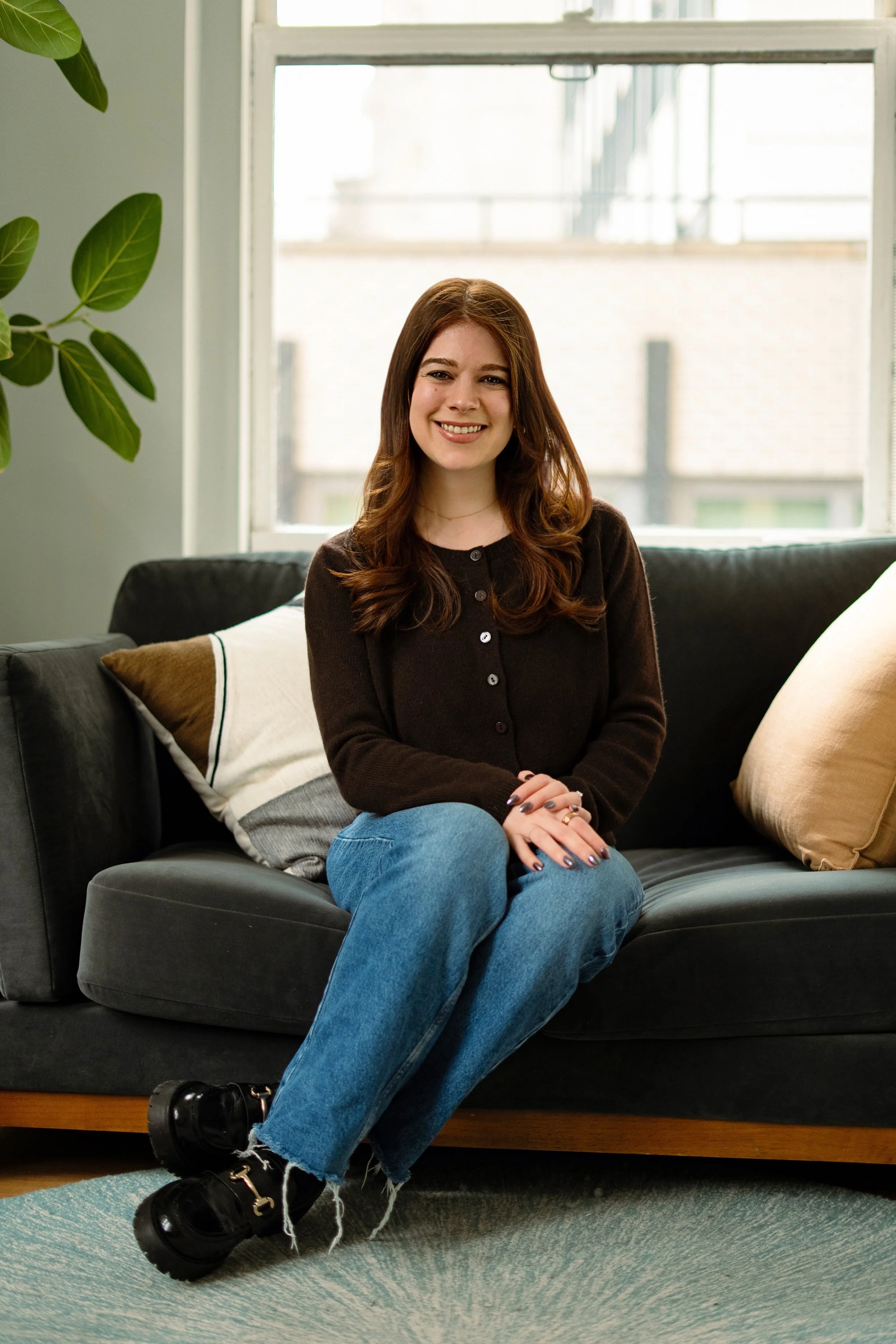
I'm Alyssa Kushner, a licensed clinical social worker but I'm not working as your therapist here - I'm teaching what I've watched work. I work with hypervigilant, hyper-responsible women who carry everyone else.
I built this because I kept watching the same thing happen. Women would understand their patterns completely - could name them, explain them, trace them all the way back - and still not be able to stop. Not because they weren't trying hard enough. Because insight was never the missing piece.
What actually changes it is doing something different, over and over, while your nervous system slowly learns that the discomfort isn't danger. That's repetitive and uncomfortable and much easier with other people doing it next to you.
So that's what I built. I'd love to have you in the room for the first one!
What People Are Saying About Alyssa’s Programs
-
"I can identify my needs and state them and hold a boundary when before I would freeze or have a physical reaction."
- Former Women’s Group Member
-
"Learning what was happening in my body and the source of my people-pleasing helped me finally understand patterns I'd struggled with for years."
-Former Women’s Group Member
-
"My biggest takeaway is the feeling of relief after naming my feeling of heaviness in my body, especially in my shoulders, head and stomach. It was powerful, necessary, eye-opening"
-Former Workshop Participant
-
"I had an epiphany after the workshop that I have taken on the role of managing other people's emotions. I've had that job all my life and I just realized what I was doing and that it's not my responsibility. I didn't realize the toll this has taken on my body."
-Former Workshop Participant
PricingFounding cohort
$397 a month for three months or $1,000 paid in full (Paying in full saves $191.)
Payments are taken at enrollment, then again at 30 and 60 days. Everything is paid before the program ends.
This is the founding price, and it exists because you'll be the first group through. In exchange I'm asking for your honest feedback along the way - what worked, what didn't, what you'd change. It won't be this price again.
Not the right season for something this big? The Over-Responsibility Reset covers a lot of the same ground, self-guided, for $67.
*Please note, after you apply you will be given a link to schedule a free 20 minute phone or video call with me!
How to join
Apply. The application takes less than 10 minutes and helps me understand what you’re carrying and whether this group is the right fit.
Discovery call with me. We will talk through what you’re looking for and discuss together if this is the right fit for you on a 20 minute phone or video call.
You're in. I send your payment link, and everything else you need before we start on September 29.

Frequently Asked Questions
-
No. It's a group educational program. It isn't a substitute for individual treatment, and I'm not acting as your therapist. It sits alongside therapy very well - a lot of women here are doing both. I will be speaking from my clinical experience though. I’m bringing everything that has worked for my clients, former group members, and workshop participants.
-
Nope! No restrictions. Sessions are 4:30–5:45 PM Eastern though. If that's a workable hour where you are, you're welcome.
-
Almost everyone here has. This isn't just insight - it's practice. Different thing entirely, and the reason the understanding you already have hasn't translated yet.
-
Sessions are recorded and Slack stays open. Miss more than three and it stops working, which is worth knowing before you apply.
-
Not at first. But it works better when you do, and groups get there faster than people expect. Nobody will put you on the spot though.
-
No. There's teaching, there's practical work, and there's a fair amount of connecting and laughing. Recognizing yourself in a room of women describing your exact life is often a relief before it's anything else.
-
You're invited into the alumni community - and you'll leave with a written maintenance plan, because the pull comes back and you should have something ready when it does. Plus you’ll have the workbook, integration guide, and video modules so you can come back for a refresher.
-
The Over-Responsibility Reset is $67 and covers a lot of the same material, self-guided. You can start there! This will run again.
-
Yes, and you can say it runs alongside individual work rather than competing with it.
-
Depends on what you what you want to put into it. We have a slack community for in between. I do ask you work on a weekly journal prompt and challenge.
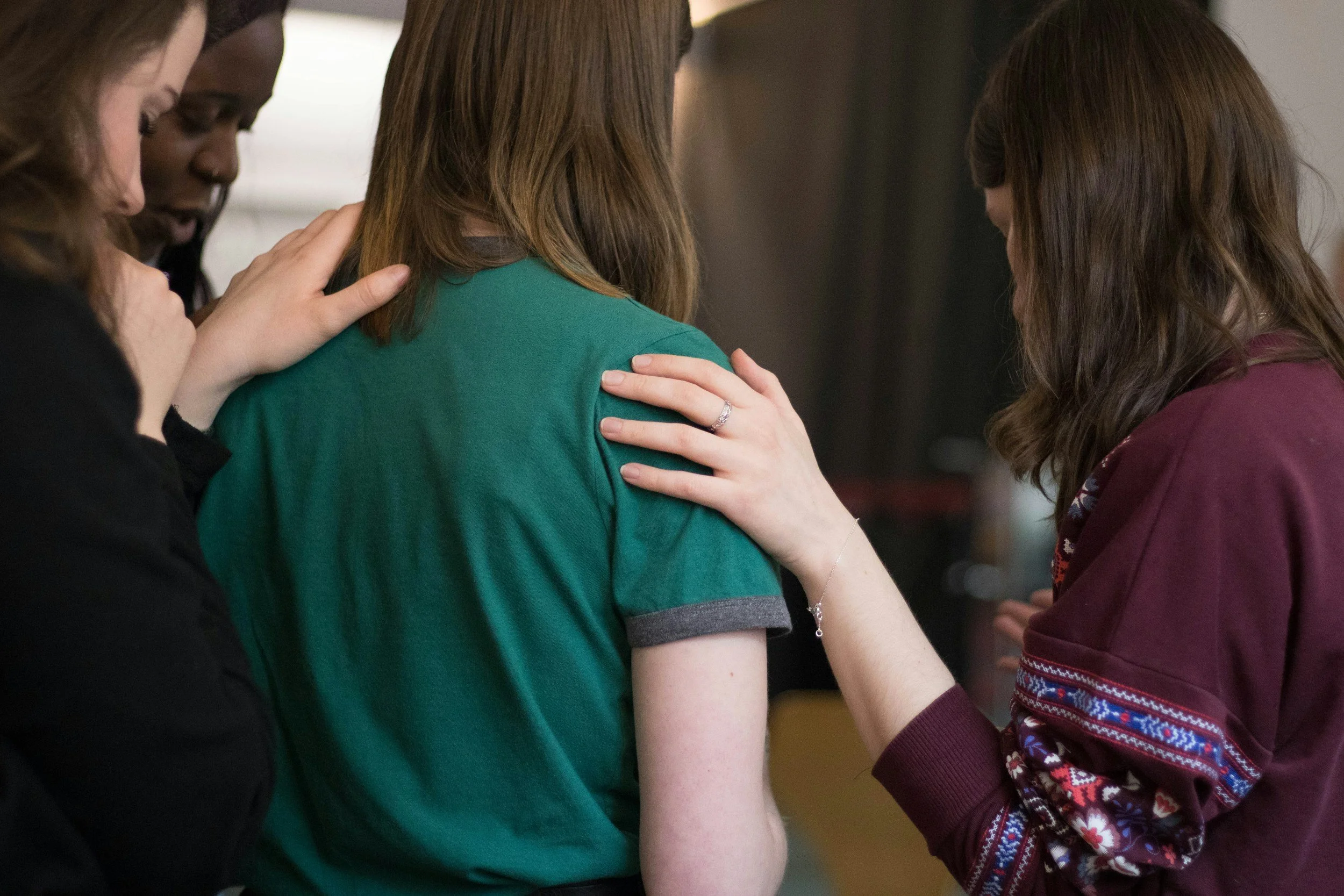
You've spent a long time being the one who holds it together.
Twelve weeks isn't very long. But it's long enough to find out who you are when you're not carrying all of it.
Starts September 29 · 8 spots · applications close September 25